Account Bound Governance Tokens DAO Legal Liability: Legal Guide
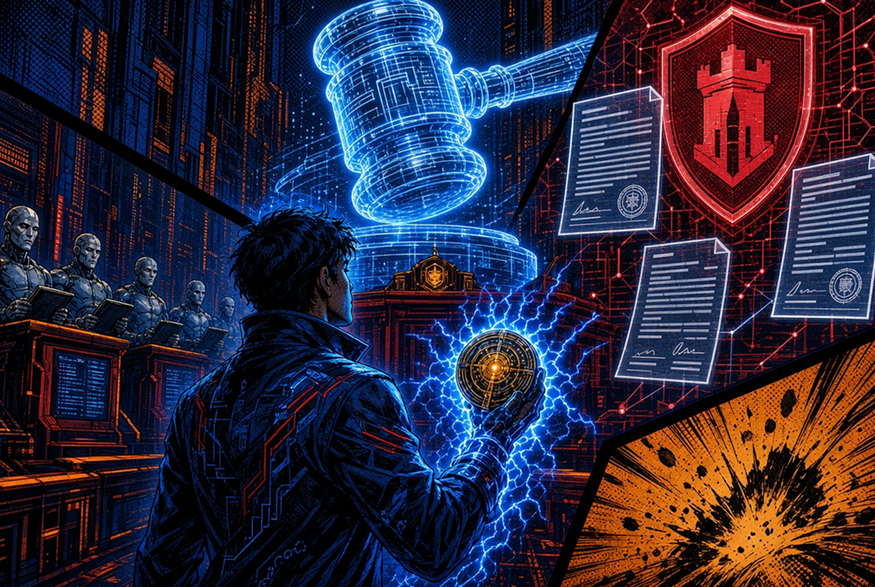
American comic book style artwork showing how account-bound governance tokens impact DAO legal liability and partner classification.

Analyzing how account bound governance tokens dao legal liability structures interact with traditional corporate law has become a primary risk management issue for decentralized protocols. In early DAO architecture, governance tokens were almost universally issued as freely tradable ERC-20 assets. While this enabled instant liquidity and speculative secondary markets, it created severe regulatory friction under … Read more
Post Quantum Cryptography Blockchain Security: 2026 Guide

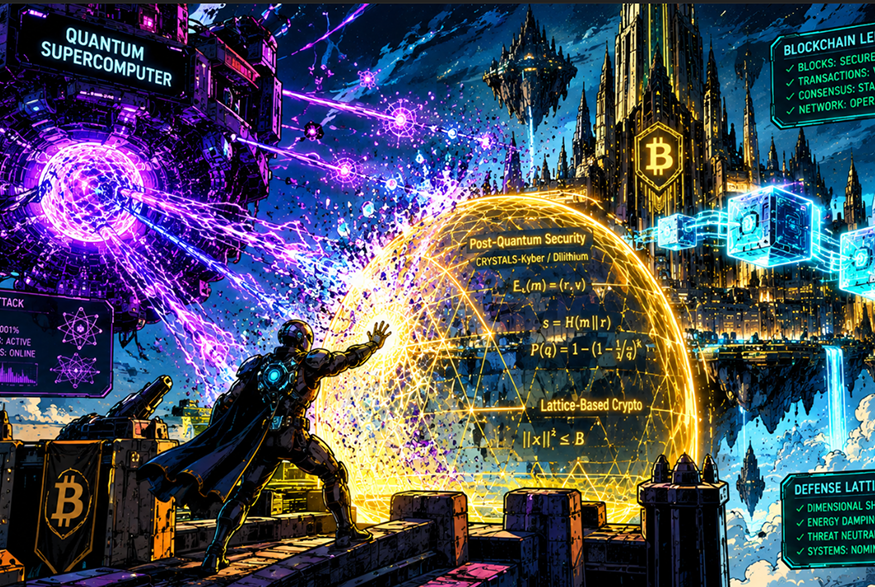
American comic book style artwork illustrating post-quantum cryptography protecting blockchain security against quantum computer attacks.

Integrating post quantum cryptography blockchain security standards has transformed from a distant academic debate into an immediate engineering priority for decentralized infrastructure. Modern public blockchains secure trillions of dollars in value using public-key cryptography—principally the Elliptic Curve Digital Signature Algorithm (ECDSA on secp256k1), Edwards-curve Digital Signatures (Ed25519), and Boneh-Lynn-Shacham (BLS12-381) pairing signatures. While these mathematical … Read more

Tokenized Private Funds SEC Registration: Legal Guide

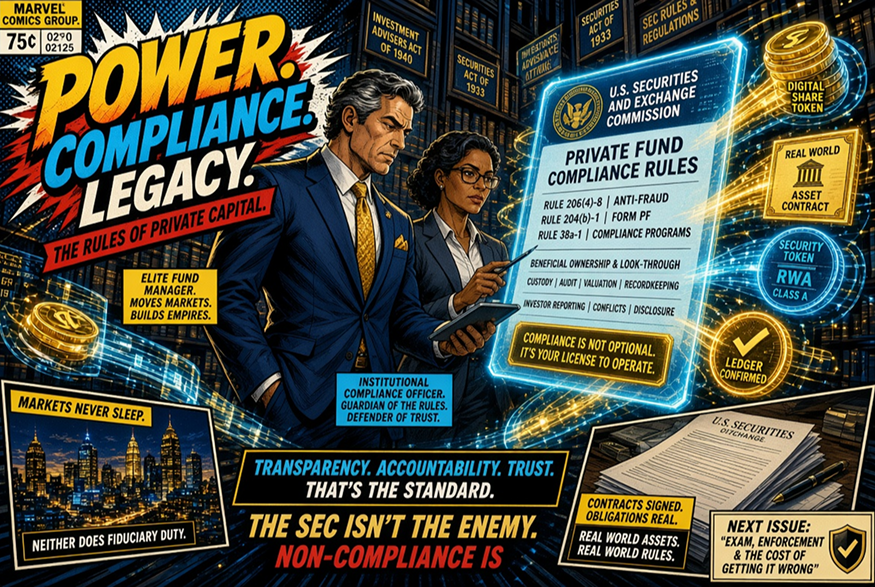
American comic book style illustration showing the regulatory framework of tokenized private funds SEC registration.

Navigating tokenized private funds sec registration standards is the single most critical legal hurdle for private equity, venture capital, and private credit managers bringing fund shares on-chain. For decades, investing in private funds required mountains of paper-based subscription agreements, manual cap table maintenance, and clunky LP transfer processes. Tokenization transforms these traditional fund shares into … Read more

Traditional HSM Web3 Integration: Institutional Key Security

American comic book style artwork showing the integration of traditional hardware security modules with Web3 blockchain custody.

When tier-one banks, sovereign wealth funds, and regulated asset managers prepare to enter Web3, they face a non-negotiable requirement: institutional-grade cryptographic key security. While retail crypto users manage wallets via browser extensions or consumer hardware seeds, corporate treasuries handling billions of dollars in digital assets cannot rely on informal key management setups. For decades, traditional … Read more

SEC Guidelines Tokenized RWA: Classification Framework

American comic book style artwork illustrating SEC guidelines on tokenized real-world asset classification.

Real-World Asset (RWA) tokenization has rapidly evolved from an experimental crypto trend into a fundamental restructuring of traditional capital markets. From tokenized U.S. Treasuries and private credit to fractionalized real estate, Wall Street institutions are bringing hundreds of billions of dollars onto distributed ledgers. However, moving physical or traditional paper assets on-chain introduces a critical … Read more

Ethereum Staking Yield: How Network Upgrades Impact Institutional Returns

American comic book style artwork illustrating the transformation of institutional Ethereum staking yields following network upgrades.

Let’s cut through the standard marketing fluff: institutional asset managers do not care about the ideological beauty of decentralization. When corporate treasuries, hedge funds, and newly approved spot ETF providers look at a blockchain, they judge it primarily on two brutal metrics: risk-adjusted returns and operational complexity. Historically, tracking and optimizing your ethereum staking yield … Read more

DVT Security Advancements: Redefining Staking Resilience

dvt security advancements

If you look at the core infrastructure of modern Ethereum staking, you will quickly notice a glaring vulnerability: the traditional single-node setup is a fragile house of cards. Historically, solo stakers and massive institutional pools alike had to run their operations on individual servers. If that single server lost power, dropped its internet connection, or … Read more

ZKP for DeFi Compliance: Balancing Privacy and Regulation

Let’s be completely honest: nobody wants their private financial history broadcasted on a public ledger for the entire world to see. For institutional funds, corporation managers, and everyday crypto users, the radical transparency of public blockchains is not a feature—it is a massive liability. For years, the decentralized finance (DeFi) space lived in a wild-west … Read more

The Bitcoin Renaissance: Why Institutional Capital is Pivoting to BTC Layer 2 Networks

institutional capital pivoting to btc layer 2 networks

For over a decade, the institutional thesis for Bitcoin was incredibly simple: digital gold. It was considered a pristine, albeit highly illiquid, store of value. While Ethereum and alternative Layer-1 blockchains captured the multi-billion dollar Decentralized Finance (DeFi) sector by offering programmable smart contracts, Bitcoin remained a mathematically secure, inflexible asset. However, as we navigate … Read more