
For years, the standard playbook for launching a decentralized application (dApp) was completely uniform: you wrote a few smart contracts, deployed them onto a massive public network like Ethereum or Solana, and shared the underlying infrastructure with thousands of other projects. But as Web3 applications grew into massive ecosystems handling millions of transactions daily, this shared-housing model revealed its fatal flaws. High gas spikes caused by unrelated NFT drops, congested blocks, and rigid virtual machine constraints turned user experiences into a painful waiting game.
The industry quickly realized that a one-size-fits-all blockchain layer is fundamentally unsustainable for enterprise-grade apps. This engineering bottleneck is exactly why the architecture of sovereign app chains web3 platforms has shifted from a theoretical blueprint into the primary choice for modern Web3 infrastructure. By building dedicated, application-specific blockchains, developers are reclaiming absolute control over their software’s destiny.
What Makes an App-Chain Truly Sovereign?
To understand this architectural revolution, we must define what “sovereignty” actually means in a decentralized network. In a traditional dApp setup, the application is subservient to the underlying Layer 1 or Layer 2 network. If the base layer decides to implement a major hard fork, change its gas token dynamics, or alter its consensus rules, your application is forced to comply, regardless of how it impacts your business model.
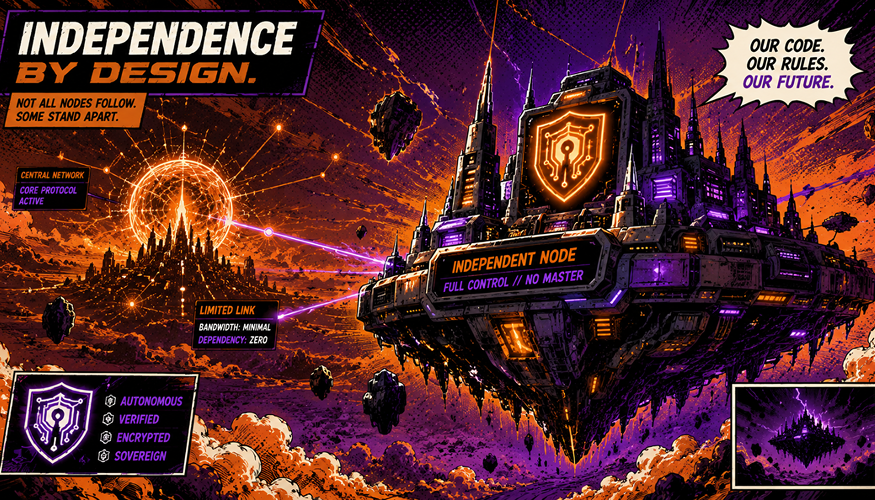
A sovereign application chain (or app-chain) flips this hierarchy completely. It is a standalone, custom-built blockchain engineered to execute one, and only one, specific application.
-
Dedicated State Machine: The entire blockchain ledger is optimized solely for your app’s transactions, eliminating resource competition from external projects.
-
Independent Governance: The app-chain’s community, token holders, or corporate operators maintain absolute legal and technical authority over the runtime environment, database structures, and protocol upgrades.
-
Custom Token Economics: Instead of forcing users to buy gas using an external native token, an app-chain allows the protocol to use its own native utility token for transaction fees, staking rewards, and economic security.
Deep Dive into the Modular Architecture Stack
Building a sovereign network requires structuring the protocol across a specialized, modular architecture stack rather than relying on a monolith block layout. This stack typically separates operations into four distinct layers:
1. The Application and Execution Layer
This is where the unique business logic lives. Unlike generic networks that force developers to write code strictly inside standard environments like the EVM (Ethereum Virtual Machine), sovereign chains allow teams to customize the execution environment completely. Using frameworks like the Cosmos SDK or Substrate, a gaming app-chain can optimize its code for ultra-fast asset transfers, while a DeFi app-chain can bake advanced cryptographic privacy features directly into the core node client.
2. The Consensus and Settlement Layer
Sovereign app-chains choose exactly how their network reaches agreement. Depending on the compliance and scaling needs, a project can implement a fast Proof-of-Stake (PoS) consensus mechanism with a hand-picked pool of institutional validators, or choose a highly controlled Proof-of-Authority (PoA) setup for internal corporate operations. Because settlement happens natively on the app-chain itself, the protocol avoids the long withdrawal queues and heavy bridge fees associated with traditional layer-2 networks.
3. The Data Availability (DA) Layer
To remain secure, the network must guarantee that all transaction data is publicly accessible so anyone can verify the ledger’s state. Sovereign architectures can handle this natively by distributing blocks across their own validator nodes, or they can leverage specialized, modular data availability networks (like Celestia or EigenDA) to drastically cut background operational costs while keeping execution blazing fast.
The Interoperability Paradox: Breaking the Silos
The historical criticism of building an isolated blockchain was the total loss of network effects. If your application lives on its own dedicated chain, how do users move assets into your ecosystem from the rest of the crypto world?
Modern sovereign app chains web3 ecosystems have solved this issue through standardized, native cross-chain communication protocols. Frameworks like Cosmos’s IBC (Inter-Blockchain Communication) or Polkadot’s XCM act as decentralized internet routing protocols. They allow independent sovereign chains to seamlessly transfer data, tokens, and smart contract calls between each other without relying on risky, centralized third-party asset bridges. Your application remains completely independent, yet natively plugged into the global Web3 liquidity matrix.
The Strategic Value for Enterprises
For corporations looking to leverage decentralized ledgers, sovereign app-chains offer the ultimate enterprise gateway. A company can build a highly tailored network where transaction fees are completely abstract or set to zero, shield corporate data using custom permissions, and scale capacity instantly without ever worrying about public network congestion.
By prioritizing dedicated execution, customizable governance, and native modular connectivity, sovereign app-chain architecture is proving that the future of Web3 isn’t a single monolithic giant—it is an interconnected internet of highly specialized, independent digital economies.