
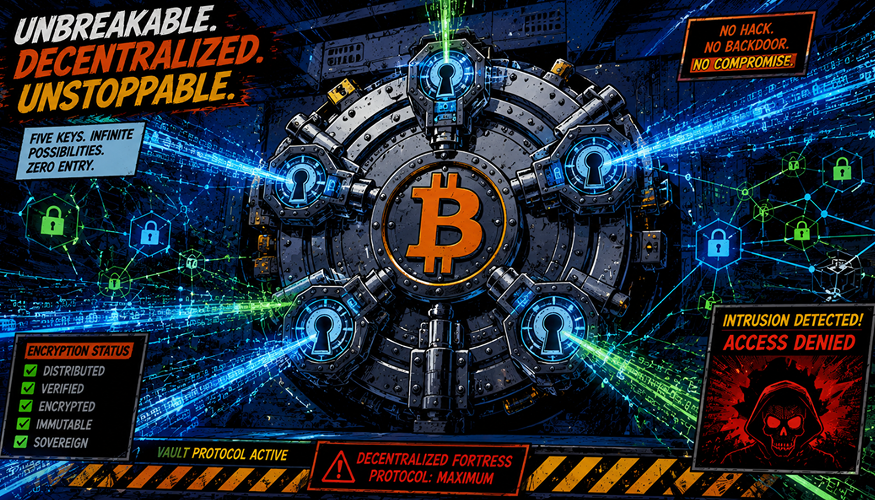
Let’s face the cold hard facts: keeping a massive corporate treasury on a standard, single-signature crypto wallet is the operational equivalent of keeping millions of dollars in cash in an unlocked desk drawer. For institutions looking to leverage the explosive growth of the Bitcoin ecosystem, security cannot be an afterthought. While cold storage works for long-term holding, executing active enterprise operations, scaling smart contracts, and managing day-to-day liquidity requires a highly functional bitcoin layer 2 multisig infrastructure.
Moving your operations to Layer 2 networks reduces crushing transaction fees and brings high-speed execution, but it also introduces entirely new structural risks. Setting up a bulletproof institutional treasury requires moving past basic consumer habits and building an elite cryptographic fortress.
Choosing Your Technical Architecture
Before generating a single cryptographic key, your engineering team must determine the specific technical architecture of the L2 environment you are building on. Bitcoin’s scaling landscape is highly diverse, and your wallet strategy must adapt to the underlying execution layer:
-
EVM-Compatible Sidechains and Rollups (e.g., Rootstock, Merlin Chain, Botanix): These networks allow you to use industry-standard smart contract multi-signature frameworks like Safe (formerly Gnosis Safe). The wallet functions as a highly programmable smart contract on the L2 state machine, giving you ultimate flexibility over spend limits, automated roles, and dapp interactions.
-
Bitcoin-Native Layer 2 Environments (e.g., Stacks, Liquid Network): These networks rely on native script-based multi-key architectures or custom execution layers. Platforms like Stacks utilize specialized enterprise tooling like Asigna to coordinate institutional signing flows, while the Liquid Network uses native cryptographic script outputs managed via dedicated coordination software.
Designing the Corporate Threshold Policy
A consumer wallet might get away with a simple 2-of-3 key setup, but an enterprise environment demands a much more resilient threshold policy. The golden standard for corporate treasuries is a 3-of-5 or 5-of-7 quorum configuration.
The core philosophy here is simple: no single individual—not even the CEO—should ever have the unilateral power to move capital out of the vault. Keys must be strictly segregated across distinct corporate functions. You distribute keys to the Executive Officer, the Chief Financial Officer, the Security Admin, and perhaps an external trusted legal custodian. This setup effectively eliminates “key person risk” and completely neutralizing the threat of an insider attack or corporate coercion.
Physical Isolation and Geographic Dispersal
A multi-signature wallet is only as strong as the physical security protecting the individual signing keys. If an engineer sets up an enterprise wallet using basic software extensions or browser wallets on everyday work laptops, the entire system is fundamentally broken from day one.
Every single key share within the quorum must be anchored to an independent, institutional-grade Hardware Security Module (HSM) or a dedicated enterprise hardware device. Furthermore, these physical devices must be geographically separated across completely different cities, regions, or legal jurisdictions. By spreading the keys globally, you guarantee that a localized natural disaster, a coordinated regional physical attack, or a sudden political lockdown in one country cannot compromise the integrity of the corporate quorum.
Implementing Programmable Compliance Guardrails
One of the greatest advantages of establishing a bitcoin layer 2 multisig on programmable infrastructure is the ability to write corporate governance directly into the code. Instead of relying on employees to follow a PDF policy manual, the smart contract strictly enforces your financial guidelines automatically.
Institutional setups should implement three essential guardrails:
-
Strict Destination Whitelisting: The multisig contract should be mathematically restricted from broadcasting transactions to arbitrary external addresses. Outbound transactions should only be permitted to interact with pre-approved corporate vendors, verified customer vaults, or internal cold-storage clearings.
-
Velocity and Spending Limits: You can configure a flexible tier system. Low-value operational transactions, such as everyday gas fee top-ups or minor supplier payments, can be programmed to bypass the full quorum, requiring only a 2-of-5 signature for instant execution. However, any transaction exceeding a specific threshold automatically triggers the full 5-of-7 quorum and initiates a mandatory 72-hour timelock delay, giving the board ample time to review and cancel a suspicious outflow.
-
Real-Time Compliance Hooks: Advanced L2 frameworks allow you to integrate transaction monitoring tools directly into the signing flow, automatically blocking interactions with high-risk or sanctioned addresses before the transaction can even be submitted to the network.
Execution and Initialization Drills
Once the physical devices are secure and the threshold rules are coded, the final step is the initialization ceremony. The team gathers the public keys from each isolated hardware module to generate the shared multi-key address structure on the L2 network.
Before moving major corporate capital into the live wallet, the team must execute a rigorous quorum drill. Fund the new address with a tiny amount of Bitcoin, and force the entire distributed team to walk through a live outbound transaction. Every keyholder must sign off, the data must compile smoothly, and the transaction must broadcast cleanly to the Layer 2 block explorer.
By taking a systematic approach to key distribution, physical isolation, and programmable contract guardrails, an enterprise can confidently tap into the massive liquidity of Bitcoin Layer 2 networks while maintaining the absolute highest standard of asset preservation.