
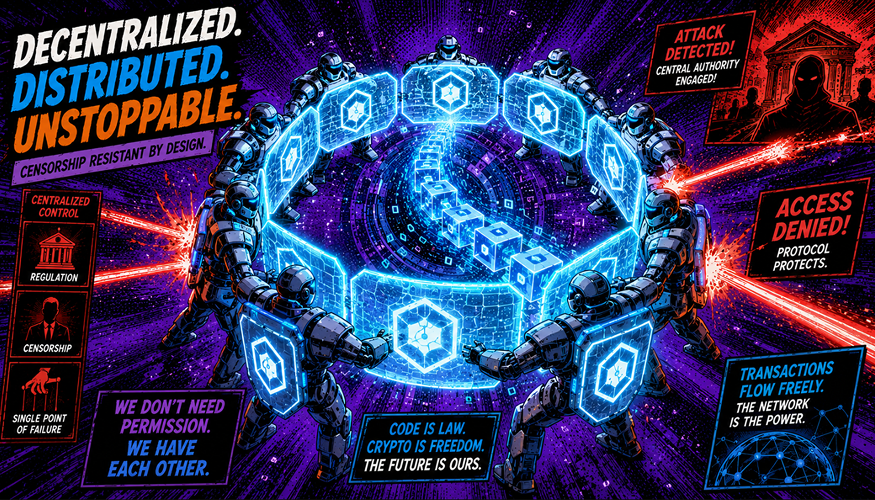
Understanding how decentralized sequencers censorship resistance protects modern Layer 2 (L2) rollups requires addressing a major structural irony in Web3. While Ethereum’s base layer is secured by hundreds of thousands of independent validators, many popular L2 rollups have historically relied on a single, centralized sequencer to order, batch, and submit transactions to Layer 1.
This single-operator design provided sub-second confirmation times and low gas fees, but it introduced a massive single point of failure. A single centralized entity running a sequencer holds the unilateral power to delay user funds, extract predatory Maximal Extractable Value (MEV) through arbitrary reordering, or selectively block transactions from entering a block entirely.
To build true long-term network resilience and protect user assets from arbitrary blacklisting, the ecosystem is shifting away from isolated operators toward decentralized sequencer networks.
The Mechanics of Censorship in Centralized Sequencing
To appreciate the solution, you first need to understand how a centralized sequencer can censor a user:
-
Direct Transaction Exclusion: When you broadcast an L2 transaction, it enters the sequencer’s off-chain mempool. A centralized operator can simply refuse to include your transaction in the next block batch based on your wallet address, geographic location, or transaction interaction.
-
MEV Exploitation and Reordering: Because the single sequencer has total authority over transaction ordering, it can sandwich trades, front-run user orders, or intentionally delay transactions to profit at the expense of end users.
-
Liveness Failures and Outages: If the centralized sequencer experiences an internal infrastructure failure, a cloud provider outage, or targeted regulatory action, the entire L2 network grinds to a complete halt.
While major rollups provide “escape hatches” or “forced L1 inclusion” mechanics (allowing users to bypass the sequencer by submitting transactions directly to Ethereum L1), these fallbacks can be prohibitively expensive and introduce severe latency delays for everyday users.
How Decentralized Sequencers Restore Permissionless Processing
Decentralized sequencer networks replace the single operator with a distributed, Byzantine Fault Tolerant (BFT) consensus set of independent nodes. Distributing the authority to order and batch transactions removes single-party control through key architectural mechanisms:
1. Rotating Leader Schedules and Threshold Consensus
Instead of one server deciding block order indefinitely, decentralized sequencing networks (such as shared sequencer pools or BFT-based networks like Espresso) utilize dynamic leader selection algorithms. The right to sequence the next L2 block rotates rapidly among staked operators. Even if a malicious operator in the active set attempts to censor a specific transaction, that transaction remains in the public mempool and will simply be picked up and included by the next honest leader in the queue.
2. Encrypted Mempools and Fair Ordering
Advanced decentralized sequencer architectures integrate cryptographic tools like encrypted mempools or Threshold Encryption. Transactions submitted by users are encrypted before entering the sequencing layer. The sequencer cluster agrees on the definitive order of transactions before decrypting their contents. Because the operators cannot inspect transaction details, sender addresses, or trade parameters prior to sequencing, selective censorship and predatory MEV front-running become mathematically impossible.
3. Economic Staking and Slashing Penalties
Operators in a decentralized sequencer set must stake significant economic collateral (often ETH or native network tokens) to participate. If an operator violates protocol rules—such as equivocation (signing two different block orders for the same slot), deliberately withholding valid transactions, or failing to maintain liveness—their staked capital is automatically slashed. This creates strong economic disincentives against malicious behavior.
4. Shared Sequencing Across Rollup Ecosystems
Shared sequencer networks provide decentralization-as-a-service to multiple rollups simultaneously. By pooling transaction ordering across multiple L2 ecosystems, shared sequencers not only enhance censorship resistance but also unlock atomic cross-rollup composability—allowing users to execute seamless, multi-chain transactions without relying on centralized bridge intermediaries.
The Path Ahead: Preserving Latency Without Sacrificing Freedom
The primary engineering challenge in transitioning to decentralized sequencing has always been latency. Centralized operators offer sub-second “soft confirmations” because only one machine needs to sign off on a block. Distributing this process across a global network of consensus nodes introduces round-trip network communication delays.
To solve this, modern designs utilize cryptographic “preconfirmations”. Staked sequencing nodes issue instant, cryptographically backed promises to users that their transaction will be included in an upcoming block. If the node fails to honor that preconfirmation, its stake is burned on L1. This delivers sub-second user experience while maintaining the structural security of a distributed consensus network.
The Bottom Line
A Layer 2 network that relies on a single, permanent operator is decentralized in name only. By distributing transaction ordering across independent nodes, implementing encrypted mempools, and enforcing economic slashing conditions, decentralized sequencers censorship resistance ensures that L2 scaling solutions preserve the foundational promise of Web3: permissionless, tamper-proof, and open financial access for everyone.